
Madison—There are dark clouds on the horizon as we look ahead to the 2025 world of natural resources in Wisconsin.
First, the terms of two of the longest remaining members of the Natural Resources Board (NRB) expire next May.
Bill Smith, the current board chair, will finish his second year as chair in January and his term ends May 1, 2025. The board’s vice chair, Marcy West, also has her term expiring on May 1.
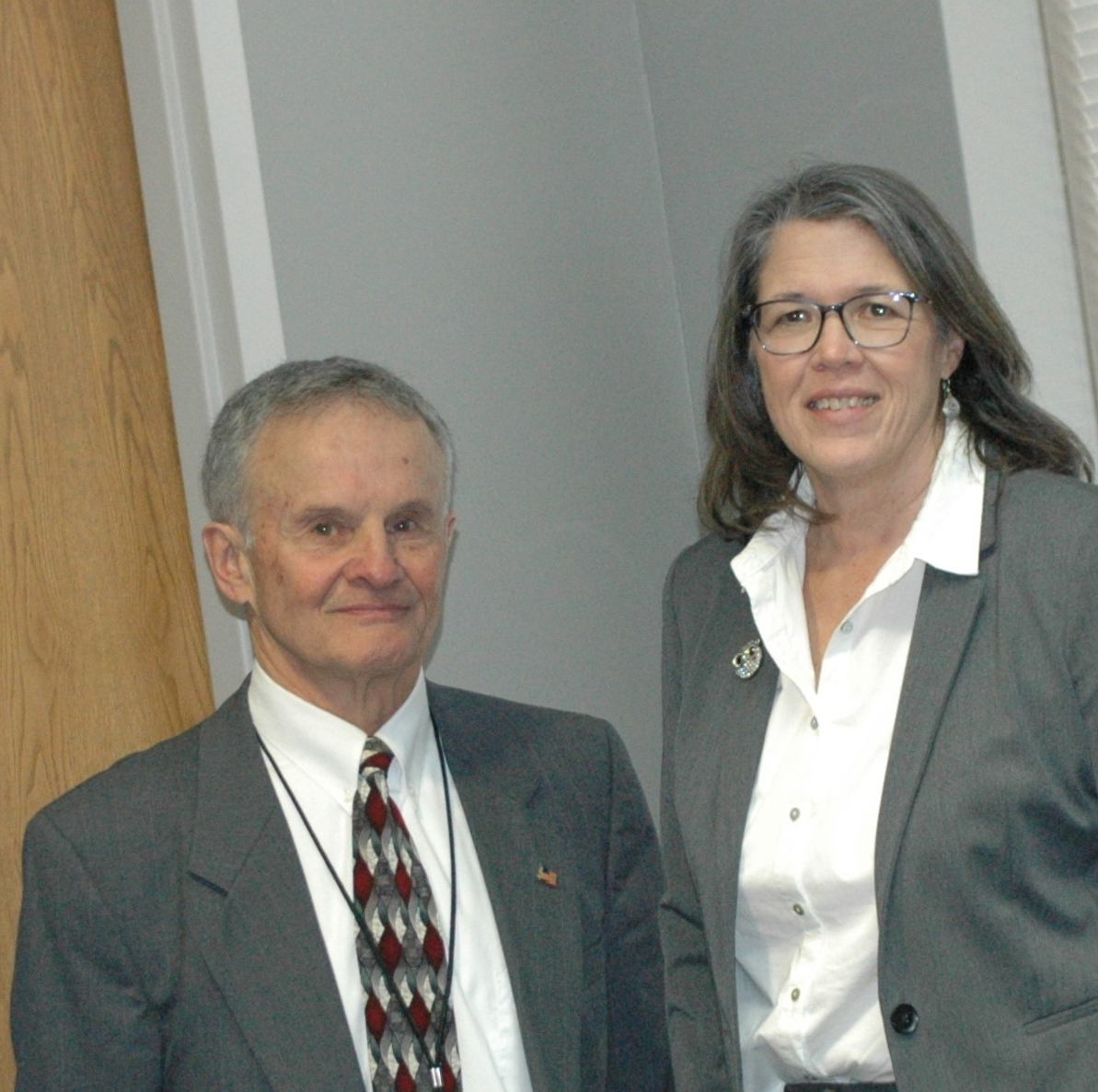
Both have the most experience on the board, serving during the turmoil while five of Governor Evers appointees (Sharon Adams, Dylan Jennings, James VandenBrook, Sandra Dee Naas, and Todd Ambs) were nominated but failed to be confirmed by the Republican-controlled State Senate.
Most any observer will tell you that Smith has provided stability and dignity as board chair during unsettling times.
Some may consider the DNR administration
more important than the NRB, but the NRB is truly the public’s access point. It is where biology and sociology come into the mix.
We need strong, dedicated board members with a passion for natural resources!
Even if Smith and West were to be reappointed by Evers, AND willing to serve again, would the Senate confirm them?
Both Smith and West were confirmed by the Senate’s Natural Resources Committee, chaired then by Sen. Cowles who had a deep interest in natural resources. More recently the Senate Committee on Financial Institutions and Sporting Heritage now handles confirmations, and has a track record of turning down qualified nominees.
Many citizens don’t realize that the NRB is comprised of volunteers who spend personal time going through briefing material, meeting with members of the public, attending public meetings and actively working at nine monthly meetings where they make decisions that can always make some happy and others upset.
Though new board members have indicated they are quick learners and have long-term interests in natural resources, the board lacks the long-term experience that many past boards have had when members were re-appointed to consecutive terms.
The board’s influence has been limited to setting policy and approving rules, since then- Gov. Tommy Thompson enabled the legislature to approve a budget that moved the Department of Natural Resources (DNR) into the governor’s cabinet. Now each governor appoints the secretary of the DNR rather than as it had been since the 1920s when the citizen board (or back in earlier days a citizen Conservation Commission) appointed the secretary.
Having the agency secretary serve at the pleasure of the citizen board was just an extra step to keep the position away from a more direct link to partisan politics.
Political appointees bring with them political interests, and under Scott Walker’s term as governor he turned additional DNR positions (chief lawyer, public information director, and legislative liaison) into appointees rather than civil servants.
Secretary concerns
Following a short stint as DNR secretary, Adam Payne resigned after less than 12 months on the job a year ago, and the secretary’s position has been filled ever since by an acting secretary.
It is fair to assume that someone (Acting Secretary Steven Little) who has his own responsibilities as deputy secretary and now has to cover the full-time secretary’s responsibilities, one of which includes being the highly visible cheerleader for the department and strong advocate for natural resources, is unfair to both positions.
And, there are “questions” about a lack of follow-through by the DNR.
One that comes up at each NRB meeting is a petition filed on behalf of 232 citizens in February, 2024 to encourage a home rule on lakes to help prevent invasive species from being moved from lake to lake by boats.
According to attorney James Olson, the petitioners still have no response from DNR.
Their request is based on a 2008 DNR requirement that all water must be drained from
ballast systems upon leaving a body of water to prevent the spread of invasives from one body of water to the next.
The petition asks the DNR to enforce the regulation, but there is no response!
DNR, and the NRB, have also fallen down on appointing representatives to the Sporting Heritage Council, an organization created by the Wisconsin legislature in 2011 and coordinated by DNR.
The Council has not met since 2022, and the NRB is supposed to appoint representatives to discuss ways to continue the traditions of hunting, fishing and trapping into the future.
Some who served on the past council say they felt their time was wasted, yet there is no recommendation by DNR for new appointments to continue a council established by the legislature.
Public members consistently appear before the NRB with concerns about what chronic wasting disease is doing to the deer herd and Wisconsin’s tradition of deer hunting. While “Rome” burns, DNR plods along with its plans for reviewing the old plan. Meanwhile CWD spreads to new areas and existing areas see higher percentages of CWD-positive deer.
Hunting licenses pay the bulk of the traditional conservation budget, and as license sales decline the question is who will pay for natural resources management in the future?
Legislative foot-dragging
2025 will bring a new legislature and a new state budget. We can expect continued bickering over whether or not to increase funding and positions to DNR and whether to refund the Stewardship Program.
The state Supreme Court has ruled that when the past legislature funded Stewardship the Joint Finance Committee could no longer continue with its secretive vetoes which stalled the purchase of many acres of land for the public.
Knowing that, some legislators have threatened to reduce funding for future Stewardship projects.
The legislature will also wrestle with how to restore forestry funding to the amount they promised, and fund the fish, wildlife and law enforcement account that hasn’t had a general license increase for residents since 2005.
Although the state budget is balanced, they do it by eliminating positions or forbidding agencies to fill positions and then the Department of Administration says vacant positions aren’t needed and eliminates positions.
Cities that used to have several wildlife technicians now have none. According to the Legislative Fiscal Bureau in 2023 DNR had 2,511 positions, while back in 2002 it had 2,965!
The State Park Program used to be funded by state taxes, but no longer.
According to the Friends of Newport State Park: Prior to 1995, state parks were funded equally by GPR, fees, and other funds butthe all GPR funding for the parks was eliminated by the 2015-17 budget, according to the Legislative Finance Bureau. That’s one reason why Wisconsin spent only $19.6 million in 2017 to operate its state parks, or $1.08 per visit, which according to annual surveys from the National Association of State Parks Directors was the lowest in the country.
And, complaints from some past DNR law enforcement employees about bias have never been publicly answered by the DNR or investigated by an agency outside of state government.
Had enough? Wait. . . it’s no secret that DNR operates with cooperation from federal agencies and some federal funds. With new emphasis from a new president and administration that portends to cut massive numbers of federal employees, (which we can assume will impact EPA and US FWS, including possibly funding for habitat improvement or the Conservation Reserve Program in the Farm Bill), that could result in fewer employees and less money to work on behalf of natural resources in Wisconsin.
It seems that Charlie Brown’s friend, Linus, has walked into Wisconsin with the proverbial cloud over his head. And, these dark clouds could turn into a gully washer.
 Tim Eisele Outdoors